
The Hidden Cost of Outdated Technical Documentation in Engineering
Technical documentation is often treated as something that gets completed at the end of a project.
The product is built, the manual is written, the diagrams are added, and the documentation is considered finished.
But engineering environments rarely stand still.
Products evolve. Components change. Suppliers update parts. Regulations shift. Processes improve. Teams change hands.
When technical documentation fails to evolve alongside those changes, problems begin to appear quietly in the background. They do not always show up as immediate failures or obvious mistakes. More often, outdated technical documentation creates slow operational friction that builds over time.
The cost is not always visible on a spreadsheet straight away.
It shows up as lost time, repeated questions, incorrect maintenance, delayed repairs, duplicated work, and preventable downtime.
Many organisations only recognise the value of documentation when it starts causing problems.
This is why maintaining documentation over time matters just as much as creating it in the first place.
Table of Contents

Why Technical Documentation Becomes Outdated
Technical documentation does not usually become inaccurate overnight.
In most cases, it drifts slowly away from reality.
Engineering environments are constantly moving, and documentation often struggles to keep pace.
A manual created three years ago may still look professional and complete, but if a product has gone through multiple revisions since then, sections of that content may already be outdated.
This often happens when:
- Components or part numbers change
- Suppliers update specifications
- Processes are refined over time
- New product variants are introduced
- Compliance standards evolve
- Teams update products but not the documentation
Even small changes can create confusion if documentation no longer reflects the current version of a product or system.
In some industries, documentation may exist in multiple versions across departments, suppliers, or regions.
This creates a situation where nobody is fully confident they are using the latest information.
Poor documentation control is often one of the root causes behind wider technical documentation problems, especially when businesses rely on disconnected files, duplicated manuals, or manually updated PDFs.
The Hidden Operational Cost of Outdated Manuals
Outdated documentation rarely causes one large failure.
Instead, it creates a series of small inefficiencies that gradually affect productivity.
An engineer follows a maintenance instruction that no longer reflects the latest component.
A technician orders the wrong replacement part because the manual references an older assembly.
A support team spends time clarifying information that should already be documented.
These issues may appear isolated, but together they create operational drag.
The impact often includes:
- Longer maintenance times
- Increased troubleshooting
- Higher risk of human error
- Delays in parts identification
- Additional support requests
- Reduced confidence in documentation
When documentation becomes unreliable, teams stop trusting it.
That is when employees begin relying on workarounds, memory, or informal knowledge passed between colleagues.
This creates inconsistency and increases dependency on specific individuals.
Documentation should reduce uncertainty, not create it.
Businesses investing in structured technical publications often see benefits not only in accuracy, but also in operational efficiency and long-term usability.
Parts Documentation and Maintenance Delays
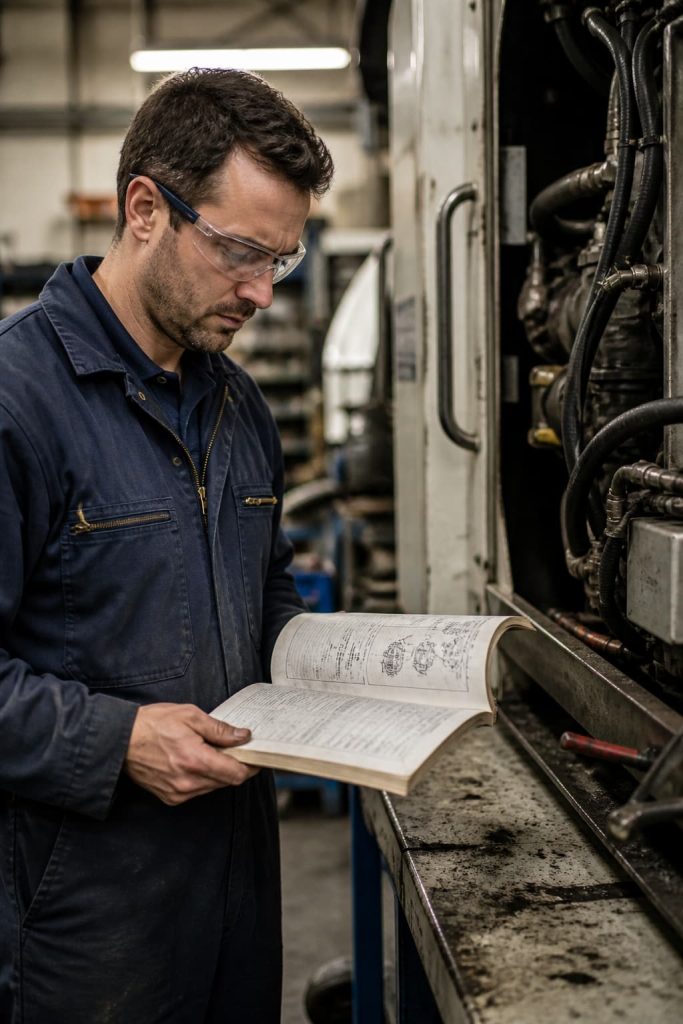
One of the biggest risks linked to outdated documentation appears during maintenance and spare parts management.
Incorrect or incomplete parts information can lead to:
- Incorrect orders
- Delayed repairs
- Increased equipment downtime
- Inventory confusion
- Duplicate purchasing
In engineering environments, accurate identification matters.
If a maintenance team cannot quickly confirm which component is required, even a minor repair can become unnecessarily slow.
This is where clear visual documentation becomes especially valuable.
Well-organised illustrated parts manuals make it easier to identify assemblies, understand relationships between components, and reduce ordering errors.
Supporting diagrams and exploded views also improve clarity when compared with text-only instructions.
A strong parts documentation process helps bridge the gap between engineering design, maintenance teams, and aftersales support.
When manuals are regularly reviewed and updated, they become a working operational tool rather than a static archive.
How Poor Documentation Impacts Training and Human Error
Technical documentation is not only used by experienced engineers.
It also supports onboarding, training, servicing, inspection, and troubleshooting.
When documentation becomes outdated, training becomes harder.
New employees may receive conflicting information.
Visual references may no longer match the product.
Instructions may refer to older systems or obsolete processes.
This creates hesitation and uncertainty.
In high-pressure environments, unclear instructions increase the likelihood of mistakes.
Visual communication can play a significant role in improving understanding.
Clear technical diagrams, process illustrations, and visual workflows often reduce ambiguity.
This is why many engineering businesses combine written documentation with technical illustration and visual communication.
In more complex training environments, businesses may also benefit from tools such as 360 product tours or 3D visual animations to improve understanding of assemblies, servicing procedures, or operational workflows.
Documentation works best when it supports how people actually learn.
The Challenge of Global Documentation
For organisations operating internationally, outdated documentation creates an additional layer of complexity.
A manual may exist in multiple languages, but if one version is updated while another is not, inconsistencies appear quickly.
Translation challenges often emerge when documentation is manually duplicated across different files or teams.
Small changes can become difficult to track.
This increases the risk of:
- Incorrect translated content
- Version mismatch between languages
- Compliance issues across markets
- Delays in product updates
Well-managed translation workflows help ensure technical information remains aligned across regions.
This becomes especially effective when documentation is created using a structured framework.
Businesses adopting structured authoring often gain stronger control over updates, reuse, and multilingual consistency.
Structured documentation also reduces duplication and helps prevent teams from editing multiple versions of the same content.
For businesses managing international products, this creates a more reliable documentation lifecycle.
Why Documentation Should Be Treated as a Living Asset
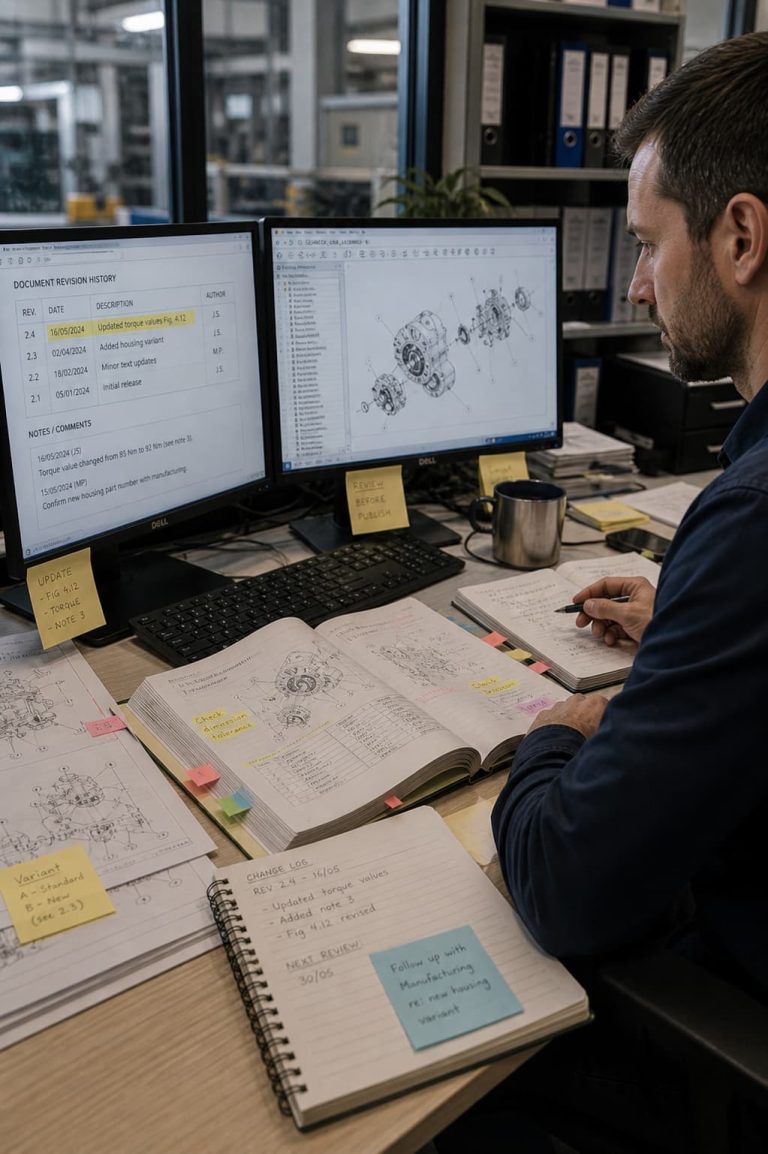
Technical documentation should not be viewed as a one-time deliverable.
It should be treated as an evolving operational resource.
Products change throughout their lifecycle.
Documentation should change alongside them.
When documentation is reviewed regularly, businesses benefit from:
- Improved maintenance efficiency
- Better knowledge retention
- Reduced onboarding time
- Greater consistency across teams
- Lower operational risk
- Improved customer support
Documentation is often one of the few resources shared across engineering, manufacturing, service, training, and support teams.
When it is maintained properly, it becomes a reliable source of truth.
When neglected, it becomes a source of friction.

Looking Beyond Initial Publication
Outdated technical documentation is rarely a dramatic problem.
It is usually a slow accumulation of small inefficiencies that eventually affect productivity, maintenance, communication, and confidence.
The strongest documentation strategies are not built around creating manuals once and leaving them untouched.
They are built around maintaining accuracy, supporting change, and ensuring information remains useful over time.
Businesses that actively manage documentation often reduce operational uncertainty while improving efficiency across teams.
If your organisation is reviewing how documentation is created, maintained, or updated, it can be helpful to assess whether current materials still reflect how products and processes work today.
Exploring your existing documentation structure, reviewing older manuals, or benchmarking against current operational needs can often highlight where small improvements may create long-term value.
For examples of documentation, illustration, and engineering support workflows, you can explore the Wilson Publications portfolio or browse additional insights on the Wilson Publications blog.
When documentation becomes easier to trust, it becomes easier to use.
And when teams trust documentation, they work with greater clarity and fewer avoidable delays.
Need to Review Your Existing Documentation?
Whether documentation is used internally, supplied to customers, or shared across international teams, keeping information current helps reduce confusion and improves confidence across every stage of the product lifecycle.
Frequently Asked Questions:
There is no fixed timeframe, but technical documentation should ideally be reviewed whenever products, components, suppliers, processes, or compliance requirements change. Even small updates can affect accuracy, especially in engineering environments where maintenance and parts information must remain reliable.
Outdated documentation can lead to incorrect maintenance, parts ordering mistakes, longer troubleshooting times, training confusion, and reduced confidence in manuals. Over time, these issues can create operational inefficiency and unnecessary downtime.
Revision control ensures that teams are working from the latest approved version of a document. Without clear version management, organisations risk multiple copies circulating across departments, suppliers, or regions, creating inconsistency and confusion.
Technical illustration improves understanding by making complex information easier to interpret visually. Diagrams, exploded views, and process visuals can reduce ambiguity and help users quickly identify parts, assemblies, and procedures.
Structured authoring is a documentation method that creates reusable content blocks rather than rewriting information multiple times. This approach makes updates easier to manage, supports multilingual documentation, and improves consistency across manuals.